Honest Water Restoration in Fairmount
When water is spreading through your Fairmount home right now, Fairmount Water Restoration delivers fast, around the clock emergency water damage restoration across Fairmount and Grant County. IICRC certified technicians handle every phase from extraction through reconstruction and coordinate directly with your insurance carrier.
If you miss us on the first try, we'll call you back within 15 minutes.


Fairmount Water Restoration provides emergency water removal and complete water damage restoration for Fairmount, IN homeowners: extraction, drying, cleanup, and reconstruction coordination, with 24/7 live dispatch and insurance claim support. Call (812) 515-1567.
- Services: water damage restoration, basement flooding, sewage cleanup, storm damage
- Service area: Fairmount, Grant County, IN and surrounding areas
- Response time: Same day for Fairmount inquiries; 24/7 emergency service available
- Licensed and insured (License #RC21100059)
- Serving Fairmount, IN since 2018
Schedule Your Free Damage Assessment
Inspections on Fairmount homes start with a room by room walkthrough, because water rarely stays where it started. We measure walls at multiple heights with non penetrating meters, check baseboards and trim, pull insulation in suspect cavities, and inspect subfloors behind cabinets, under sinks, around water heaters and washing machines, and along the basement perimeter and slab joints. Thermal imaging cameras map hidden moisture behind drywall and under flooring, a penetrating moisture meter confirms readings, and a hygrometer logs ambient conditions. In older Fairmount homes with full basements and aging plumbing, water often tracks down stud bays into spaces you cannot see from above. Catching it now prevents the most expensive failure in water restoration: hidden moisture that fuels mold growth weeks after the visible damage is cleaned up.
I agree to be contacted by Fairmount Water Restoration regarding my inquiry.
Vacation timing is a Fairmount water damage classic: the supply line fails on day one of a week away. Water runs unchecked, and the home that left dry comes back saturated. Emergency mitigation, contents recovery, and honest scoping turn a nightmare arrival into a managed project.
Water hitting your Fairmount home right now? Crews on-call 24/7. Truck-mounted extraction, commercial drying, full insurance documentation.
Insurance questions get answered honestly here: what policies typically cover, what documentation adjusters expect, and how Fairmount claims move fastest. We work with every carrier serving Grant County and build files that stand up, while you make the decisions.
Payment Options That Work for You
We partner with established lenders so Fairmount Water Restoration clients can spread the cost of a major restoration project into manageable payments. Ask your project lead about current options.
Pay for your project at a later time, but lock in today's pricing. Ideal for homeowners waiting on insurance settlements.
- No payments for 12 months
- No interest if paid in full
- Lock in current pricing today
Divide your project cost equally across 12 months with zero interest. Most homeowners choose this option for predictable budgeting.
- Equal monthly payments
- 0% interest for 12 months
- Simple, predictable budgeting
Spread your investment over up to 20 years with fixed equal payments. The right choice for larger projects or homeowners who prefer lower monthly amounts.
- Up to 20-year terms available
- Fixed equal payments
- Ideal for larger restoration projects
Subject to credit approval. Ask your project lead for current terms and promotions.
From Inspection to Final Walkthrough
Pick the service that matches what happened in your Fairmount home, or call and we'll help you sort it out.
Water Damage Restoration in Fairmount
Serving Fairmount: full scope residential water damage restoration including emergency extraction, structural drying, antimicrobial treatment, and reconstruction. IICRC S500 protocols applied from assessment through final walk through.
Learn moreBasement Flooding in Fairmount
For Fairmount addresses, basement flood response for groundwater intrusion, sump pump failure, sewer backup, and storm driven flooding. Includes water extraction, structural drying of foundation walls and slabs, and finished basement restoration.
Learn moreSewage Cleanup in Fairmount
Serving Fairmount: category 3 sewage cleanup handled under IICRC S500 and S520 containment protocols. Contaminated materials are removed, surfaces antimicrobial treated, and air filtered through HEPA before the space is returned to use.
Learn moreStorm Damage in Fairmount
In Fairmount, storm damage water restoration for wind driven rain intrusion, tree impact penetrations, and severe thunderstorm flooding. Immediate water extraction, drying, and reconstruction of affected interior structure and finishes.
Learn moreCommercial Water Restoration in Fairmount
For Fairmount addresses, commercial water damage restoration for offices, retail, and light industrial properties. Includes extraction, structural drying, content protection, and coordination with property managers and insurance carriers.
Learn moreCommercial Flood Damage Cleanup in Fairmount
For Fairmount addresses, commercial flood damage cleanup covering groundwater, storm flooding, and large volume water events. Crews scale equipment to building square footage and document every phase for the carrier.
Learn moreCommercial Sewage Cleanup in Fairmount
Serving Fairmount: commercial sewage cleanup performed under full S520 containment, including biohazard handling, antimicrobial treatment, and verification before the space is reopened to staff or customers.
Learn moreCommercial Mold Remediation in Fairmount
For Fairmount addresses, commercial mold remediation following IICRC S520, with containment, HEPA filtration, controlled removal of affected materials, and post remediation verification when warranted.
Learn moreCommercial Storm Damage in Fairmount
In Fairmount, commercial storm damage restoration covering water intrusion through compromised building envelopes, interior drying, and rebuild of affected finishes, ceilings, and structure.
Learn more
Local Expertise, Real Results
Built on doing the work right the first time, with documented readings and verified drying, for Fairmount homeowners who need it done correctly.
Fairmount Water Restoration is the local restoration company Fairmount homeowners call when water is moving through a home in the middle of the night. Licensed and insured in Indiana, IICRC trained, and on the road within 2 hours, day or night, weekend or holiday. License #RC21100059, Fairmount and Grant County since 2018.
Fairmount Water Restoration serves Fairmount homeowners with full scope water damage restoration, covering the Main Street Commercial District, the streets around Park Cemetery and Playacres Park, and out into Grant County communities like Marion, Gas City, Jonesboro, and Sweetser. Our crews have spent years on Fairmount water restoration calls, from burst galvanized supply lines in two story wood frame homes to flooded basements after spring storms. The work is performed by IICRC certified technicians on a licensed and insured crew, dispatched to Fairmount whenever the call comes in. We answer the 24/7 emergency line ready to deploy. The goal is simple: get to your home fast, stop the damage, and walk you through what happens next.
Every Fairmount water damage job is run to the IICRC S500 standard for water damage restoration, with S520 protocols applied any time mold remediation enters the scope. That starts with a moisture assessment using thermal imaging and penetrating meters to map where water has actually traveled, not just where it shows on the surface. From there we run controlled extraction, set structural drying with monitored air movement and dehumidification, and apply antimicrobial treatment when the Category of water calls for it. Materials are verified dry against unaffected baselines before any reconstruction begins. The rigor matters because hidden moisture is what turns a small loss into a mold problem 30 days later.
Our Promise
We make three commitments to Fairmount homeowners. First, fast emergency response, dispatched day or night through our 24/7 line, because every hour without extraction expands the damage. Second, IICRC certified technicians trained to the S500 standard handle the work, with thermal imaging and moisture meters used on every assessment. Third, we provide a free on site inspection before any work is authorized, and if you have an active claim we coordinate directly with your insurance carrier so the scope and documentation line up with your coverage.
Why We’re the Fairmount Water Restoration Crew
Fairmount homeowners get IICRC certified work, thorough moisture mapping, and a free inspection before anything is authorized, with documentation built to clear your insurance claim.
Around the Clock Emergency Response
Water damage in Fairmount does not wait for business hours, and neither do we. Our 24/7 emergency line stays open for burst pipes at 2 AM, sewage backups on a Sunday, and storm flooding during severe weather warnings. Crews are dispatched quickly with extraction equipment already loaded, so work starts when we arrive.
IICRC S500 Certified Crews
Our technicians are IICRC certified and trained to the S500 water damage restoration standard. In practice that means proper Category determination, documented moisture readings, structural drying to verified dry standard, and S520 protocols when mold remediation enters the picture. You get work that holds up to insurance scrutiny and protects your home long term.
Full Scope, One Crew
From the first extraction pass through final paint and trim, the work stays with us. We handle mitigation, drying, controlled demolition, and reconstruction including drywall, flooring, and finish carpentry. Fairmount homeowners deal with one project manager and one schedule instead of waiting on a separate general contractor to pick up after dry out.
Insurance Coordination Done Right
We work with your insurance carrier from the first inspection forward. Photo and video documentation, written moisture maps, meter readings, and a scope justified per IICRC standards go to your adjuster. Most Fairmount homeowners never have to chase paperwork, we handle the back and forth so the claim moves cleanly.
Real Jobs. Real Results.
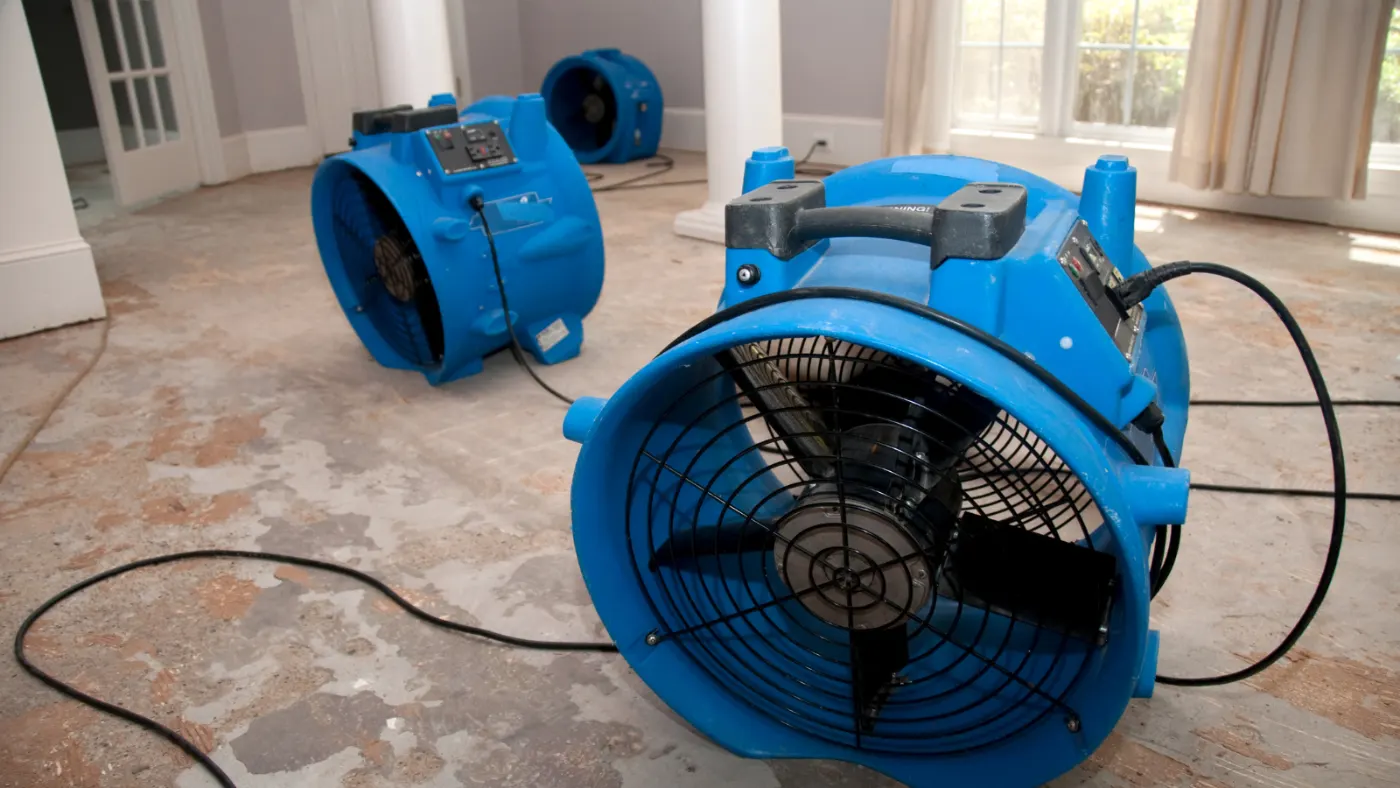
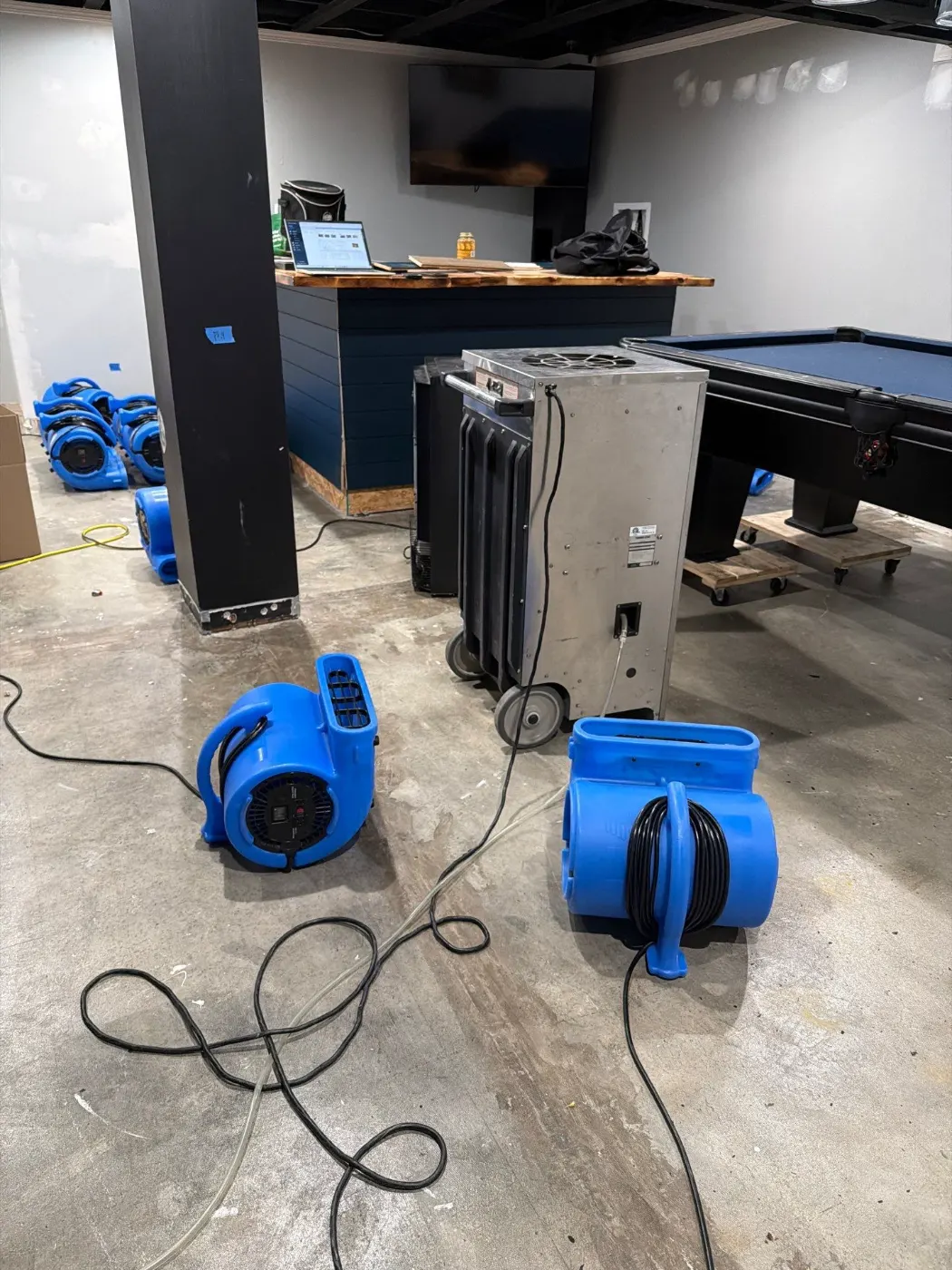
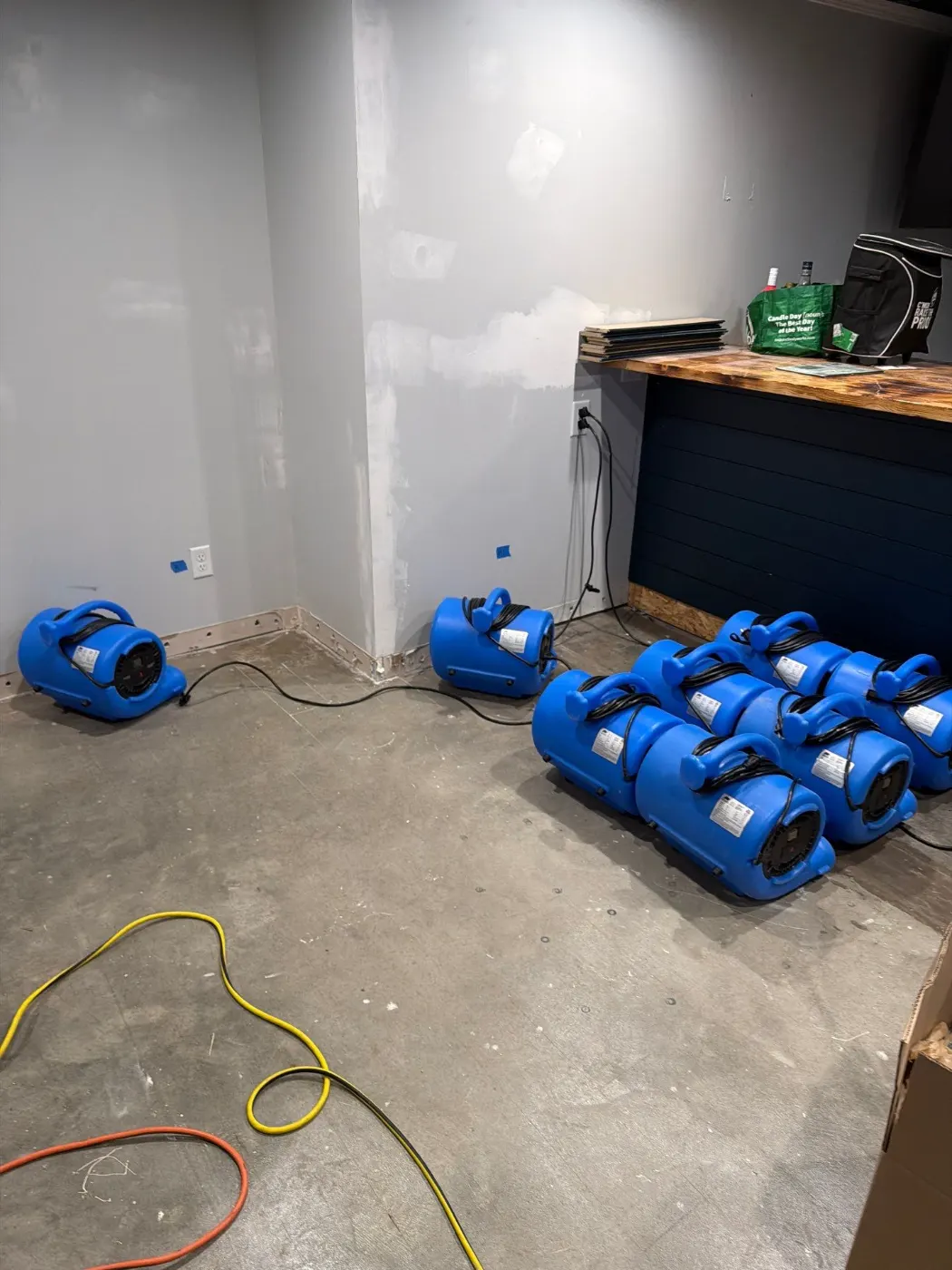
Real water damage projects completed for Fairmount homeowners and across Grant County, including burst pipe restoration, basement flooding response, sewage cleanup, and post storm reconstruction.

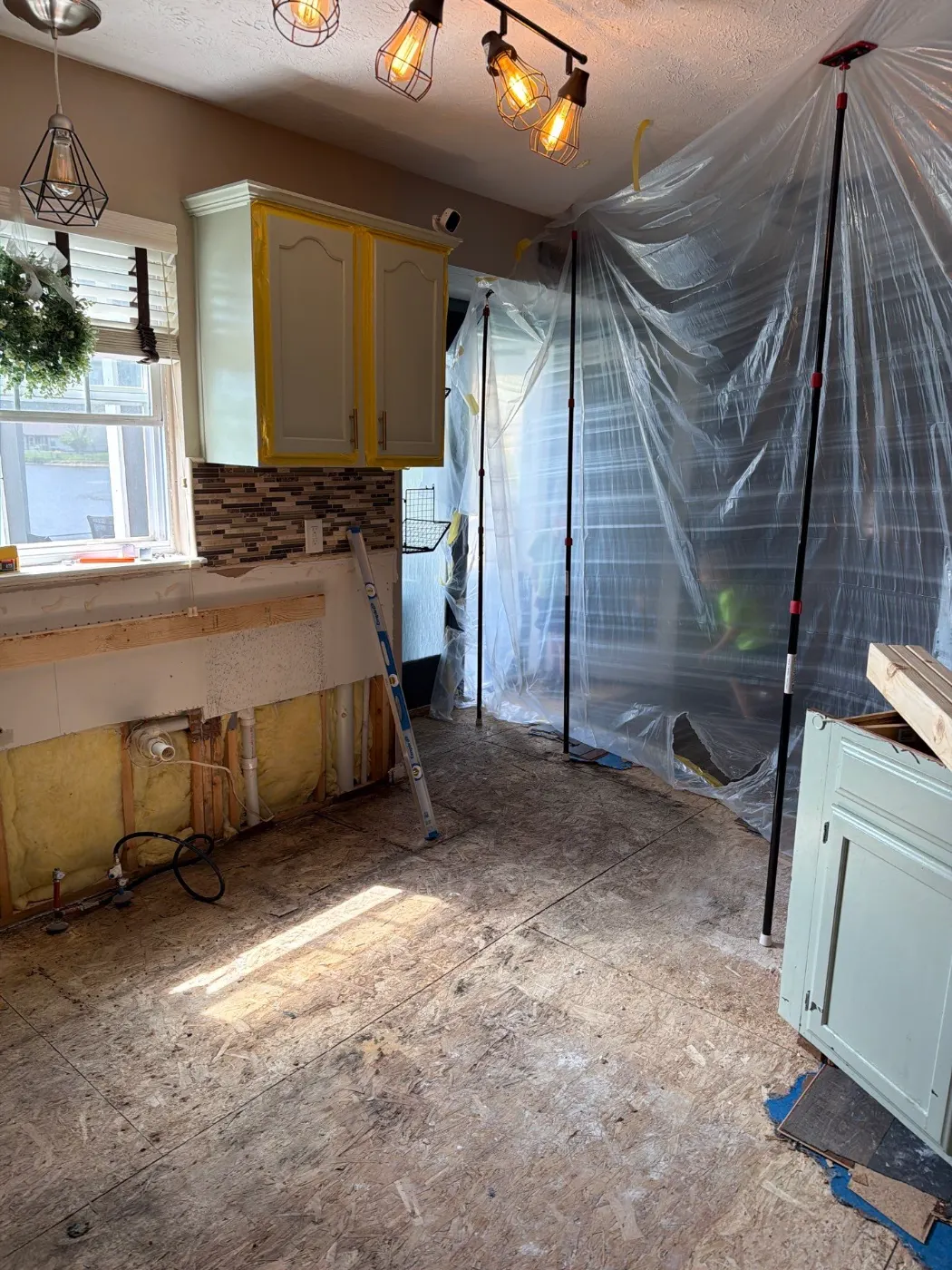
How We Respond to Fairmount Water Damage
The first phase on a Fairmount water restoration call is moisture assessment and Category determination. A certified technician walks the property, identifies the source (broken supply line, dishwasher or washer failure, sewage backup, storm intrusion through a damaged envelope), and classifies the water as Category 1, 2, or 3 per IICRC S500. Thermal imaging and meter readings map where moisture has actually traveled, and the full scope of damage is documented before any drying equipment is set. This phase typically takes one to two hours and produces the assessment your insurance carrier will need.
Next is insurance coordination and documentation. Before mitigation begins, every affected area is photographed and video documented, a written moisture map with logged meter readings is built, and we open direct contact with your insurance adjuster. Scope of work is matched to your coverage and the mitigation justification is recorded per industry standard. Most Fairmount homeowners never see this paperwork because we handle it directly with your insurance carrier. The point is simple: clean documentation up front prevents disputes and delays later in the claim.
Then comes drying execution and reconstruction. Air movers and dehumidifiers are placed based on structural drying calculations sized to the affected square footage, with daily monitoring and logged readings until materials hit dry standard, meaning moisture content matched to unaffected areas of the home. Controlled demolition happens only where materials cannot be saved. From there reconstruction puts the home back together: drywall, insulation, flooring, paint, trim, and finish work. For Fairmount homeowners the practical result is a single point of contact carrying the job from the first extraction pass through final walk through.
Rapid Emergency Dispatch
When the call comes in, equipment is already loaded: extraction units, dehumidifiers, air movers, meters, and thermal imaging. A certified technician leads the crew to your Fairmount address and extraction begins on arrival. The first priority is stopping the spread of water and protecting unaffected areas with containment.
Category Determination per S500
Water is classified as Category 1 (clean from supply lines or appliance overflow), Category 2 (gray, from dishwashers, washers, or toilet overflow without solids), or Category 3 (black, sewage or floodwater). The Category drives everything: what gets dried, what gets removed, what PPE and containment is required. Readings are logged in a written assessment.
Insurance Partnership
We work with your insurance carrier, not around them. Photo documentation, moisture maps, and a scope justified per IICRC standards go to your adjuster, and we communicate directly through the life of the claim. Invoicing stays transparent, and there is no hidden charges, and a free inspection before anything is authorized.
Drying to Verified Standard
Equipment runs with daily monitoring and logged moisture readings. Drywall, framing, subfloor, and insulation are measured against unaffected baselines, and reconstruction only begins once materials confirm dry. Skipping this step is how mold problems surface six weeks later, so we do not skip it.
Top Causes of Fairmount Water Emergencies
Fairmount homes typically call us about these six water damage scenarios.
Slab Leak Under the Floor
Water under a slab has to surface somewhere, and it comes up at the perimeter, at expansion joints, and through flooring adhesive. Carpet at the wall goes damp, wood cups, and the base of the drywall wicks it up from below.
Appliance Failures
Dishwashers, washing machines, refrigerator ice maker lines, and water heaters fail without warning. Slow leaks behind appliances can run weeks before the wall behind them shows visible damage.
Sewer Line Backups
Clay sewer mains in older Fairmount neighborhoods crack over time, allowing roots to enter and eventually causing backups. Heavy rains worsen the problem by overwhelming compromised lines.
Heavy Rain and Saturated Ground
Surface water is a grading problem before it is a plumbing one. A patio pitched toward the house, a downspout ending at the wall, or a flower bed built up above the siding line all deliver rain exactly where it should not go.
Downspouts Discharging at the Foundation
Extensions are the cheapest prevention there is. Get the discharge several feet out and downhill, keep the grade sloping away from the house, and most of the seepage calls stop coming.
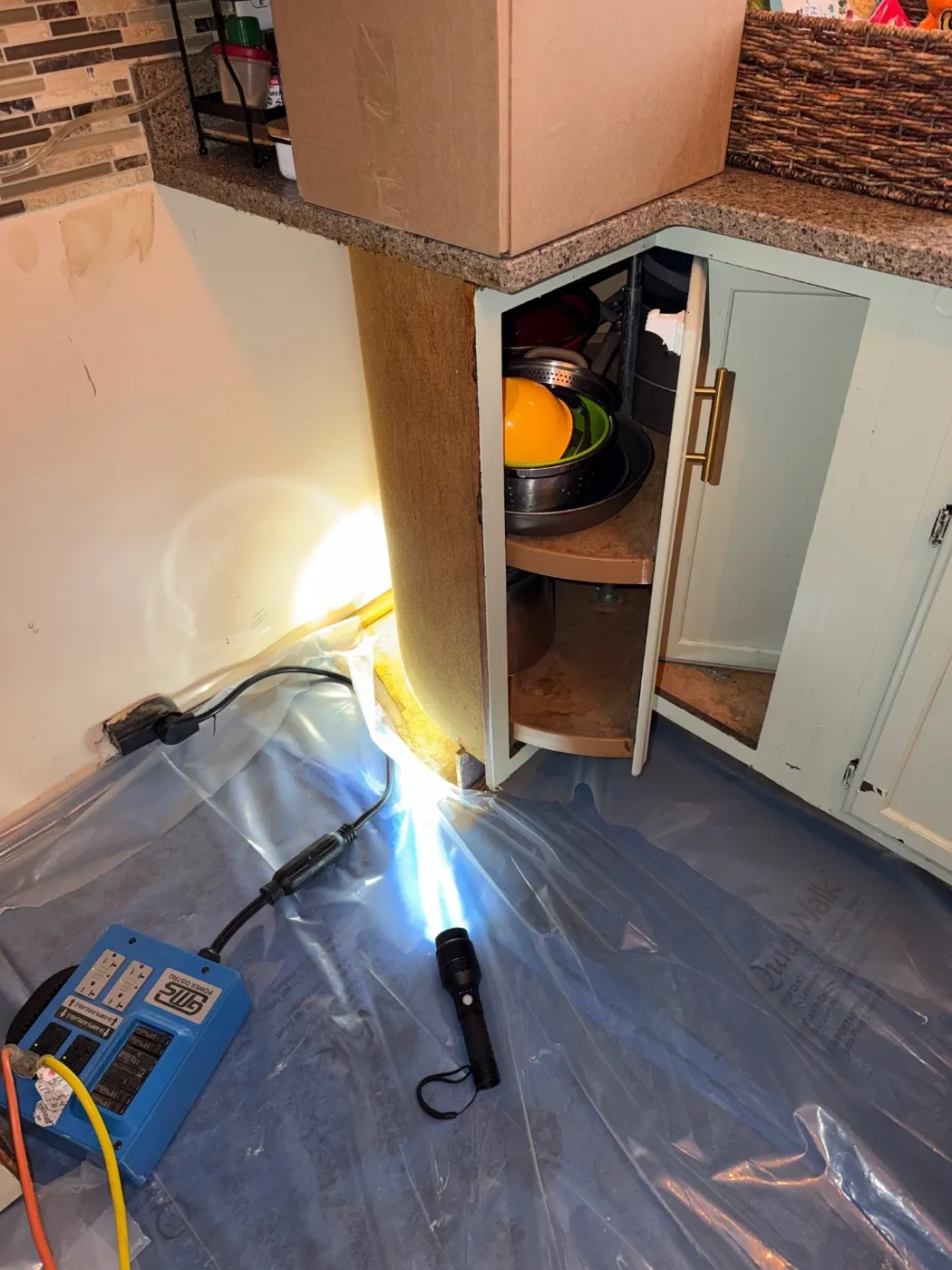
Dishwasher Leak Under the Cabinet
Pull the machine out and the story is written on the floor: a rust ring at the fitting, swollen particleboard, and a dark line where water ran toward the sink base. All of that gets photographed before demolition so the cause and the timeline stay in the file.
The First Hour After Water Gets Into Your Fairmount Home
In the first hour, close the main water valve if a pipe or appliance is leaking, and keep away from outlets and cords near the water. Then use the rest of this checklist to protect what you can while help is on the way.
1. Shut off the water at the main
If the water is coming from a pipe or an appliance, turn the main shutoff valve clockwise until it stops. In most houses it sits where the water line comes in, often on a basement wall facing the street or near the water heater.
2. Unplug what you can reach safely
If a lamp or a space heater is plugged in near the water and the floor around it is still dry, unplug it and carry it to a dry room. Leave anything that's sitting in water exactly where it is for the crew.
3. Treat sewage water with care
Water from a sewer backup can carry bacteria, so avoid touching it with bare skin. Close the door to the affected room if you can, and keep everyone on a dry floor until the crew arrives with protective gear.
4. Get belongings off the floor
Lift loose items and boxes onto a table or a bed in a dry room. Storage bins with snap lids can wait a little longer, but open cardboard boxes should come out of the water first.
5. Lift furniture off wet carpet
Slide aluminum foil or plastic lids under the legs of wood furniture so stains don't bleed into the carpet. Pull up throw rugs and hang them somewhere dry, since they hold water against the floor underneath.
6. Our crew takes the photos
Our crew takes the damage photos when we arrive, so you can spend the first hour on the steps on this list. We photograph each wet room before anything moves, and those pictures go into the photo report you keep.
7. Soak up clean water
If the water came from a supply line or the water heater, you can blot it with towels and mop the floor. A wet and dry shop vac works for clean water too. Leave any water from a sewer or a floor drain for the crew.
8. Call before the water spreads further
The sooner the crew starts drying, the more of your floors and walls can be saved. Call as soon as the water is off, even late at night, since our dispatch line runs 24/7.
Keep this list handy, and call us as soon as the water is shut off so the crew can start drying your home.
Three Simple Steps
This is what happens after you call us about water in your Fairmount home, in the order it happens.
Crew Dispatch
Speed here decides what gets dried instead of replaced. The equipment list is the same whether the loss is small or whole home. Any hour, any day, a call means a crew dispatched within 2 hours.
Measure and Record
What the meters say is what the plan follows. Full moisture map, Category classification per IICRC S500, photos and readings logged. Everything documented for your insurance claim before any work begins.
Restore the Home
Most Fairmount homes hit dry standard in 3 to 5 days, verified before equipment leaves. The job ends clean, swept, and walked. Extraction, drying, decontamination, and restoration.
What's in the Photo Report You Get From Our Crew
The photo report is how we show you what we found. It pairs the crew's photos with moisture readings for each room, so you can follow the drying day by day and keep a copy for your records.
What caused it
Finding the cause comes first, because drying a room does little good if water keeps coming in. The report names the cause in plain words and shows it in photos, so you have a record of it later.
Water you can't see
Water often ends up somewhere out of sight, like under cabinets or inside a wall cavity. The report shows those spots with readings and photos so nothing gets closed back up while it's still wet.
Your belongings, documented
Damaged contents get photographed where they were found, along with the rooms around them. If something can't be saved, the photo report shows its condition so you have a record of it.
What can dry where it is
Some materials can be dried right where they are, and some have to come out. The report shows which is which, with the readings behind each call, so you understand why a section of drywall or flooring is being removed.
Progress you can follow
Each visit adds a new set of readings and photos, so the report shows the drying day by day. If one spot dries slower than the rest, you'll see it in the numbers along with what the crew is changing to fix it.
Questions are welcome
Ask about anything in the report that doesn't add up. The crew can take a new reading while you watch and explain what it means for that room, and seeing a dry wall next to a wet one makes the numbers easier to follow.
Sharing the report
The report is yours to share with anyone you choose. We document damage with a photo report and walk you through what we found, so you can decide with your insurance company, and your own policy spells out what it covers.
You keep your copy of the photo report after the job, so file it with your other home records once the drying is done.
Questions to Ask a Water Damage Company in Fairmount
Use these questions with any water damage company you call in Fairmount.
What happens if you find mold?
Ask how mold behind walls or under floors gets handled, and whether that work is priced apart from the drying.
Who handles repairs after drying?
Ask who replaces drywall, flooring, paint and trim once the structure is dry, and whether one company can do both stages.
Who will be working in my home?
Ask whether the crew works for the company you called or for a subcontractor, and who's in charge on site each day.
How will you show me it's dry?
Ask for moisture readings on the first visit and the last one, so you can see the numbers reach dry standard.
Can I see an itemized estimate?
Ask for every line item in writing. Many insurers price water losses in Xactimate, so an estimate in that format is easier for an adjuster to review.
Does my policy require a certain company?
Ask your adjuster before you sign anything, and read the work authorization so you know what you're agreeing to.
Indiana Weather Drives Restoration Calls Year Round
Indiana weather drives most of our Fairmount calls. Spring brings days of saturating rain that pushes groundwater through older basement walls, summer thunderstorms with 60 mph gusts drive rain into wind damaged envelopes, and winter cold snaps freeze and burst aging galvanized supply lines in walls and crawlspaces across Fairmount.
Spring Saturation Flooding
East central Indiana springs bring days of heavy rain on already saturated soil, and Fairmount's flat Grant County terrain gives groundwater nowhere to go but through foundation walls. Full basements take on water through cracks, cove joints, and around old window wells. When called, we extract standing water, set dehumidification, and dry the structure before mold takes hold.
Winter Pipe Bursts
Indiana cold snaps push wind chills to twenty below, and Fairmount homes still running original galvanized supply lines are statistically prone to freeze related failures. A burst pipe in an exterior wall or unheated crawl can release hundreds of gallons before anyone notices. We extract, open wall cavities where moisture has tracked, and dry framing before refinishing.
Severe Thunderstorm Intrusion
The National Weather Service has issued severe thunderstorm warnings naming Grant County with 60 mph gusts capable of driving rain horizontally into older wood frame structures. Wind driven rain finds gaps around windows, siding penetrations, and storm damaged areas of the envelope. Storm damage water restoration starts with stopping intrusion, then drying and rebuilding what got wet.
Sewer Backup Events
When heavy rain overwhelms Fairmount's older municipal sewer infrastructure, the path of least resistance is back up the lateral and into basement floor drains. That is Category 3 water by definition, requiring full S500 and S520 protocols. Contaminated materials are removed under containment, surfaces antimicrobial treated, and air filtered through HEPA before reoccupation.
Neighborhood Coverage in Fairmount
The Fairmount neighborhoods we cover, with notes on the homes in each one and where water usually gets in.
Where we respond near Fairmount
Along with Fairmount, our crews respond to the closest neighboring communities, 24/7.
Water Risk Across the Fairmount Area
What we know about Fairmount homes before we walk in.
About Fairmount Homes
The majority of Fairmount's housing stock was built prior to World War II, with over 31.8% of units constructed before 1940 and only 3.8% built after 2000, making it one of Indiana's older small town housing markets. Homes from this pre-WWII through mid century era were predominantly plumbed with galvanized steel pipe, which corrodes from the inside out and is highly prone to failure and restricted water flow in aging structures; some post-1950s homes may have copper supply lines. Fairmount is characterized by single family detached homes, which comprised roughly 988 of approximately 1,262 total housing units per census records, typical of east central Indiana small towns built in the late 19th and early 20th centuries, primarily two story wood frame structures and modest Craftsman- and Victorian era houses on full or partial basements. The town's older building stock and flat Grant County terrain mean many homes have full basement foundations that are susceptible to water intrusion during heavy rain events and snowmelt.
Where We Work in Fairmount
We cover homeowners across Fairmount near Park Cemetery (James Dean's burial site), James Dean Gallery/Museum (203 E. Washington Street), Fairmount Historical Museum (203 E. Washington Street), Playacres Park, Fairmount Public Library (217 S. Main Street), Park Elementary School (500 S. Sycamore), Madison-Grant High School (11700 S/E 00 W), Main Street Commercial District.
Surrounding Areas We Serve
Our crew also covers Marion, Gas City, Jonesboro, Upland, Sweetser, Swayzee.
Recent Weather Patterns
Fairmount and Grant County sit within a recurring severe thunderstorm corridor in east central Indiana, with the National Weather Service having issued multiple severe thunderstorm warnings directly naming Fairmount and Grant County, including events with 60 mph wind gusts capable of driving rain intrusion into older structures. The broader Indiana region experiences repeated cycles of heavy spring rainfall, rapid snowmelt flooding, and extreme winter cold snaps with wind chills reaching -20 to -25°F, all of which elevate risks for basement flooding, sewer backup, and freeze thaw pipe bursts in Fairmount's aging housing stock.
What Our Crew Sees in Fairmount
Fairmount's housing stock is dominated by pre-WWII and mid century construction, meaning a large portion of homes still carry original or aging galvanized plumbing systems that are statistically prone to pinhole leaks, corrosion failures, and sudden bursts, particularly during Indiana's freeze thaw winters. The town's flat Grant County terrain and older municipal sewer infrastructure increase the likelihood of stormwater overwhelm and sewer backup into basements during heavy rain events common to the region's severe thunderstorm season. Full basement foundations are standard in this era of Midwest residential construction, and without modern sump pump systems many of these basements are vulnerable to groundwater intrusion during spring snowmelt and sustained rainfall.
The Fairmount Area
Fairmount had a population of approximately 2,682 at the 2020 census, with a median household income around $47,000,$51,700 and a median home value near $110,000,$126,000, well below state and national averages. The town is a predominantly owner occupied (roughly 70,86%), blue collar, lower middle income community with a significant share of older residents and aging households.
Inside Water Restoration Work in Fairmount
What the equipment does, what containment is for, and who rebuilds.
Emergency Response is the first phase on any Fairmount water damage call, and it starts before our truck rolls. Commercial water extraction equipment, commercial dehumidifiers sized to the affected square footage, professional air movers, calibrated moisture meters, and thermal imaging cameras are already loaded. On arrival, extraction begins promptly and structural drying setup typically happens the same day, with daily monitoring and logged readings from that point forward. Work zones are contained with plastic, unaffected rooms are protected, and we walk you through what to expect day by day. This phase handles Category 1 losses (clean water from supply lines, appliance overflow) and Category 2 losses (gray water from dishwashers, washers, toilet overflow without solids). The goal is straightforward: stop the spread, pull the standing water, and start the structure drying before mold has a chance to colonize.
Specialized Containment is the phase that protects your family and your home when the water is contaminated or active mold is present. This applies to Category 3 water (sewage backup, floodwater, long stagnant water with biological growth) and to mold remediation handled per IICRC S520. Containment is built with 6-mil plastic barriers floor to ceiling, entry points sealed, and negative air machines pulling contained air through HEPA filtration before exhausting outside the work zone. Technicians wear full PPE including Tyvek suits, N95 or P100 respirators per the S520 standard, nitrile gloves, and eye protection. Contaminated drywall, insulation, carpet, and pad are cut and bagged for disposal, remaining structure receives antimicrobial application, and post remediation verification through air sampling is performed when conditions warrant. This is the phase where IICRC certification matters most. Corner cutting here is what causes long term health problems and repeat failures.
Reconstruction is where the home goes back together. The crew that performed extraction and drying carries the rebuild: drywall hung, taped, mudded, sanded, primed, and painted; flooring replaced whether carpet and pad, vinyl plank, hardwood refinish, or tile reset; trim and baseboards reinstalled or replaced; cabinetry repaired or swapped; doors rehung; electrical and plumbing finish work coordinated with licensed trades. One project number runs from initial call through final walk through, one project manager stays on the phone with you, one schedule, one final invoice. The alternative most restoration companies offer is to hand off after drying to a separate general contractor, which means two crews, two schedules, two billing cycles, and gaps between phases where the home sits in demolition for weeks. We do not work that way.
What Happens During the Days Your Fairmount Home Is Drying
You can usually stay home in the days after extraction while the equipment pulls moisture out of your floors and walls. Your part is mostly keeping things the way the crew set them up, and the notes below cover what homeowners ask about during those days.
What each machine does
Air movers push air across wet floors and walls so the water evaporates, and dehumidifiers pull that moisture back out of the air. The two kinds of machines work as a pair, so both need to keep running.
Set units back the way they were
The crew places each unit based on where the readings are wettest. If you bump one or need to get past it, set it back the way it was, aimed at the same spot.
Keep the room set up the same way
The crew will tell you which doors to keep closed and where to set the thermostat. Drying works by controlling the air in the room, so keeping it the way it was set up keeps the drying on schedule.
Keep cords clear
Cords run along the floor between the outlets and the equipment. Leave them where the crew routed them, and keep rugs and furniture off the cords so they stay cool and easy to see.
Safe paths through the house
Equipment and cords can turn a familiar hallway into a tripping spot, especially at night. Leave a light on along the path you use most, and keep small kids away from the units while they run.
A crew visit each day
Someone from the crew stops by each day to take readings and move the equipment where it's needed. Tell them about anything new you notice, like a musty smell or a soft spot in the floor.
Humidity after the job
CDC recommends keeping indoor humidity as low as you can, no higher than 50 percent all day long. After the equipment leaves, a basement dehumidifier and a working bathroom fan help keep it there.
The last day of drying
On the final visit, the crew takes one more set of readings to confirm the wet areas are dry. Then the equipment comes out and the rooms are ready for any repairs they need.
Keep these notes handy for the drying days, and call us if a unit stops running or a breaker keeps tripping.
Sources: CDC, About Mold
Water damage response pricing in Fairmount
Restoration pricing in the Fairmount market depends on water Category, affected square footage, and how much reconstruction the loss requires. The ranges below are typical, not quoted. Every job starts with a free on site inspection that produces the actual scope and price before any work is authorized.
Fairmount Water Restoration is powered by Indy Roof & Restoration
Indy Roof & Restoration runs this site and does the work booked through it. Fairmount sits in territory Indy Roof & Restoration has worked since 2018, from the main roads to the back streets. Indy Roof & Restoration has 2,380+ Google reviews from homeowners.
Licensed and insured · License #RC21100059
Their standing includes BBB A+ Rated · Owens Corning Preferred Contractor · Malarkey Certified Contractor. Their work has drawn coverage from FOX59, WISH TV, and RTV6. Local roots show in things like Habitat for Humanity, Toys for Tots, the annual school supply backpack drive, and local youth sports and school programs across central Indiana.
Expert Answers to Your Water Damage Questions
What to expect, in plain answers to the questions Fairmount homeowners ask us most.
Expert Fairmount Restoration Crews Available Now
If water is spreading through your Fairmount home right now or you are seeing signs of hidden moisture after a recent storm, call our 24/7 emergency line for fast dispatch. The on site inspection is free with no obligation, and we coordinate directly with your insurance carrier so the claim moves cleanly.