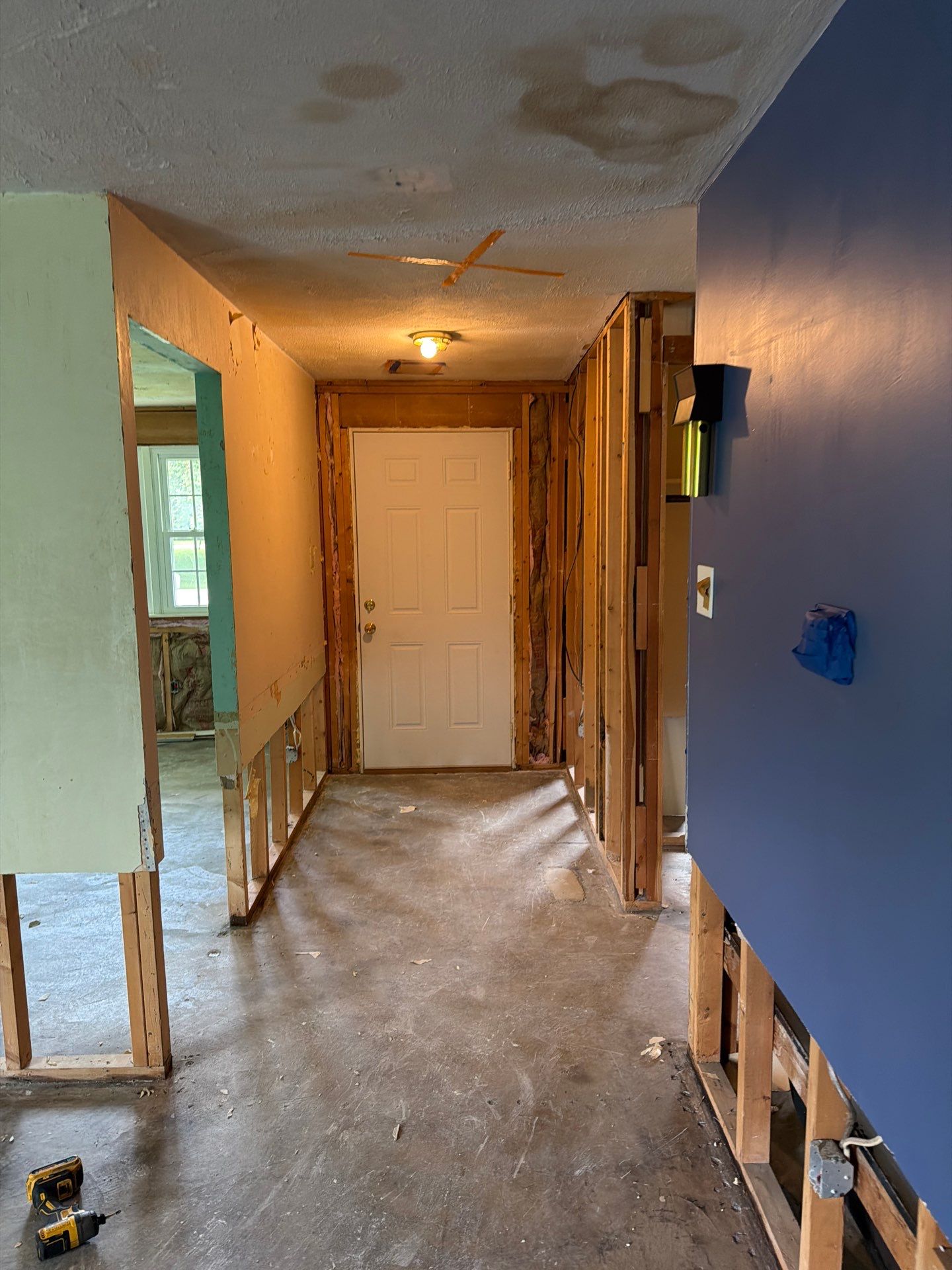
Step-by-Step: How to Vet and Price a Restoration Company
- Verify IICRC certification (2 minutes). Go to iicrc.org and search the company name. Confirm active status in WRT (Water Damage Restoration Technician) and ASD (Applied Structural Drying). Category 2 and Category 3 losses also require certified handling. No certification, no callback.
- Confirm licensing and insurance (3 minutes). Request a Certificate of Insurance showing general liability of $1,000,000 minimum and active workers compensation. In Indiana, ask for the contractor's plumbing or general license number if structural repair is included.
- Check BBB and Google reviews with filters (5 minutes). Sort Google reviews by "Lowest" first. Read the 1 and 2 star reviews and look for repeat complaints about: missed appointments, surprise charges, mold returning, or unresolved insurance disputes. A company with 4.7+ stars and 100+ reviews in Fairmount is your floor.
- Request a written scope of work (within 24 hours). The scope must list: Category (1, 2, or 3), Class (1 through 4), affected square footage, materials to remove, equipment count, and drying days. Verbal estimates are not acceptable.
- Compare line-item pricing against Xactimate norms. Most insurers in Fairmount use Xactimate. Standard ranges below are what you should see on the invoice.
- Confirm response time in writing. Fairmount Water Restoration and other reputable firms commit to a 60 minute arrival window in Fairmount. Ask for that commitment by text or email before dispatch.
- Request three local references from the past 90 days. Call at least one. Ask whether the final invoice matched the original scope within 10 percent.
Specifications: What Each Line Item Should Cost
- Emergency service call: $150 to $350 after hours, often waived if work is approved
- Water extraction: $0.50 to $1.50 per square foot for Category 1, $1.50 to $4.00 for Category 3
- Air movers: $25 to $50 per unit per day, typically 1 mover per 150 sq ft
- Dehumidifier (LGR): $75 to $130 per unit per day
- Antimicrobial application: $0.30 to $0.70 per square foot
- Drywall removal (flood cut, 2 ft): $2.00 to $3.50 per linear foot
- Carpet pad removal and disposal: $0.50 to $1.00 per square foot
- Content manipulation: $40 to $75 per hour, per technician
- Containment barrier (6 mil poly): $1.00 to $2.00 per square foot of barrier
- Moisture mapping with thermal imaging: $150 to $400 flat
- HEPA air scrubber (per unit per day): $75 to $125, required when mold is suspected
- Hardwood floor drying mats: $150 to $300 per day for full systems
- Disposal and dump fees: $50 to $200 per load depending on volume
Total job ranges in Fairmount typically land at $1,300 to $5,500 for Category 1 single-room losses, $4,000 to $12,000 for multi-room Category 2, and $8,000 to $28,000 for Category 3 (sewage) or whole-basement events. For deeper breakdowns, see our complete water damage restoration cost breakdown.
Insurance Coordination: Step-by-Step
- Open the claim before signing any contract. Call your carrier within 24 hours of discovery. Record the claim number on every document.
- Request the adjuster's Xactimate estimate. Compare it line by line against your contractor's scope. Differences of more than 15 percent on any single line item should be flagged in writing.
- Understand the AOB before signing. An Assignment of Benefits transfers your claim rights to the contractor. In Indiana, you can negotiate a Direction to Pay instead, which keeps you in control while still allowing direct insurer-to-contractor payment.
- Document with photos at every stage. Pre-loss, mid-mitigation, equipment placement, and final readings. Fairmount Water Restoration typically provides a shared photo log, but you should keep your own backup.
- Request supplements promptly. If hidden damage appears after demolition, supplements must be submitted within the carrier's window, often 30 days.
Review Signals That Predict Job Quality
- Reviews mentioning daily moisture logs or thermal imaging. Indicates IICRC S500 compliance.
- Reviews mentioning direct insurance billing with named adjusters or carriers. Indicates claim experience.
- Reviews from property managers and landlords. Indicates volume and process maturity.
- Photos in reviews showing containment, labeled equipment, and clean job sites.
- Owner responses that are specific, not templated. Templates suggest scale without service.
- Mentions of final walkthrough or written completion certificate. Indicates closeout discipline.
- Reviews dated within the last 60 days. Stale review profiles can mask staffing or ownership changes.
Final Verification Checklist Before You Sign
- IICRC certificate number recorded
- Certificate of Insurance on file
- Written scope with category, class, and equipment count
- Line-item pricing matched against ranges above
- Payment schedule defined (deposit, progress, final)
- Completion criteria defined in moisture content values, not days
- Warranty period stated in writing (most reputable Fairmount firms offer 30 to 90 days on drying)
- Photo documentation protocol agreed in writing
- Single point of contact named (project manager, not dispatch)
- Change order process defined: written approval required before any scope expansion
Step-by-Step: Day One Through Day Five Execution
- Hour 0 to 2: Arrival, safety assessment, power isolation if needed, photos for claim documentation. Moisture readings recorded with a penetrating meter (Delmhorst BD-2100 or equivalent).
- Hour 2 to 6: Extraction of standing water using truck-mounted or portable units rated 100+ PSI. Target: zero standing water before equipment placement.
- Hour 6 to 24: Selective demolition if Category 2 or 3. Flood cuts at 2 feet above the waterline. Insulation removed if wet. Subfloor inspected per subfloor moisture protocols.
- Day 1 to 3: Drying chamber established. Target equilibrium: wood under 16% MC, drywall under 1% WME, concrete under 4 lb/1000 sq ft per ASTM F1869.
- Day 3 to 5: Daily moisture logs. Equipment adjusted or removed as goals are hit. Final clearance reading documented in writing.
- Day 5 to 7 (if applicable): Post-drying mold inspection if any organic material remained wet beyond 48 hours. Air sample taken before reconstruction starts.
Red Flags: Reject the Company If Any Apply
- Refuses to put scope in writing before starting
- Asks for full payment up front (deposit of 10 to 25 percent is normal, full is not)
- Cannot name the IICRC category of your loss
- Uses only desiccant air movers without LGR dehumidifiers on Category 2 or 3
- No moisture readings provided at completion
- Pressures you to sign an AOB (Assignment of Benefits) before you understand it
- Subcontracts the entire job without disclosure
- Quotes a flat fee without category, class, or equipment count
- Lacks a physical address within 50 miles of Fairmount
If your loss involves sewage or a sump failure, the vetting bar is higher. Review our notes on Category 3 sewage cleanup protocols before signing anything in Fairmount.